
The trip’s done, the car’s back with the rental place, and you’re all set to pay the bill. Then you spot an extra charge: a traffic challan from while you were behind the wheel. With a self drive rental, that’s easy to miss, and a violation can end up tacked onto your final bill when you least expect it.
Now you are left wondering: if the car isn’t yours, are you still responsible for the fine?
The short answer is yes; just because you didn’t buy the car doesn’t mean you are not responsible while you are renting it. As the person behind the wheel, you are expected to follow the rental car traffic rules. Respecting speed limits, carrying the required documents, and avoiding traffic violations are the most basic expected regulations you should follow, not just because you have rented a car, but to be safe on the road. Additionally, you can be contractually obligated to pay any fines that are accrued while you are renting.
You can avoid unforeseen costs, pointless arguments, and hassle by being aware of rental car traffic rules before picking up the keys.
Understanding Rental Car Traffic Rules in India
A rented car is still a motor vehicle under Indian traffic laws. Whether you own it, borrow it, or rent it for a weekend, the same road safety regulations apply. The Motor Vehicles Act, 1988, governs driving licenses, vehicle registration, road safety, and traffic offenses across India. It does not provide a general exemption for rental vehicles. For someone renting a self drive car, this means following the same basic requirements as any other driver:
•Own a current driver’s license that is suitable for the car.
•Adhere to the posted speed limits on the road.
•Put on a seat belt and make sure other people do the same.
•Pay attention to lane markers, road signs, and traffic lights.
•Refrain from operating a vehicle when under the influence of drugs or alcohol.
•Only park in locations that are allowed.
•Never permit someone who is not permitted or allowed to operate a vehicle.
What you need to keep in mind is that the agreement you signed didn’t give you permission to ignore traffic rules. The Motor Vehicles Act, particularly Sections 3, 5, 112, and 183, covers driving authorization, owner obligations, and speed related violations.
Who Is Responsible for Traffic Violations in a Rental Car?
This is where people often get confused. Let’s make this clear. With your own car, a ticket is pretty clear cut. Rent one, and there are two people in the picture: whoever owns the vehicle and whoever’s behind the wheel. And their responsibilities don’t always line up.
The driver’s responsibility
Your driving is completely on you. Run a red light, speed, mess with your phone behind the wheel, park where you shouldn’t, or skip the seat belt, and you’re the one who answers for the traffic offense.
The rental company’s responsibility
The rental company still owns the vehicle on paper, and that comes with legal duties of its own. Section 5 of the Motor Vehicles Act says an owner, or whoever’s in charge of the vehicle, can’t let someone drive it if that person doesn’t meet the legal requirements. The company might also get traffic notices tied to the vehicle’s registration. That doesn’t mean it’s on the hook financially for every violation a renter commits, though. This is where the rental agreement matters: it usually spells out how fines, challans, and other charges from the booking period get handled. Put simply, the authorities may go to the registered owner first, and the rental company can then recover a valid fine from the renter under the terms they agreed to.
Who Pays the Traffic Fine on a Rental Car?
Let’s get to the question renters actually care about: Who pays the traffic fine on a rental car? In a lot of self drive rental setups, it’s the customer who broke the rule who covers the fine. Here’s how it usually plays out.
1. A traffic violation is recorded
Either a traffic cop spots it, or an automated camera does. Could be overspeeding, jumping a signal, or some other traffic offense.
2. An e-challan is generated
Depending on how enforcement works, the violation goes against the vehicle or the driver they’ve identified. The electronic challan carries the details: the vehicle registration number, what the offense was, and the fine that applies.
3. The registered owner receives a notification
The Odisha Transport Department says an e-challan can send an SMS to the mobile number registered with the vehicle, and you can also look up the details on the mParivahan app. That’s how a rental company can find out about a traffic violation even after the customer has already returned the car.
4. The rental company contacts the customer
The company can go through its rental records to see who had the vehicle when the violation happened. If it fell within your booking period, they may ask you to pay the fine, depending on what your rental agreement says.
5. The challan is paid, and the receipt is retained
You can check and pay the fine through the official e-Challan portal, as long as that particular challan offers those payment options. Keep the payment confirmation, always.
But what actually happens if you decide not to pay?
An unpaid challan is not something to ignore. The Odisha Transport Department says unpaid e-challans may be forwarded to court, and certain vehicle related services can stay blocked until the matter is sorted out. It gives a 15-day payment period from the date of issue, though you should always check the actual challan notice and current instructions for the deadline that applies.
What Happens If You Receive a Traffic Challan in a Rental Car?
Getting a challan isn’t a reason to panic or jump straight to blaming the rental company. The smart move is to deal with it right away and keep your record clean.
Here are four practical steps to follow:
Step 1: Verify the challan. Look at the registration number, date, time, location, and offense listed on it, and confirm the violation actually happened while you were driving the car.
Step 2: Inform the rental company. Get in touch with them and share the challan details. And if the notice shows up after you’ve already returned the car, don’t just ignore it. The company might need your help sorting out the booking and who’s responsible for paying.
Step 3: Go through the official payment process. Use the official e-Challan portal or whatever payment instructions the traffic authority gives you. Think the challan was issued by mistake? Let that be clear in the conversation with the rental company.
Step 4: Keep proof of payment. Save the receipt and send it to the rental company if they ask. That way, nobody can scam you into paying the already paid challan again, and you avoid a pointless argument.
A little documentation goes a long way for both sides.
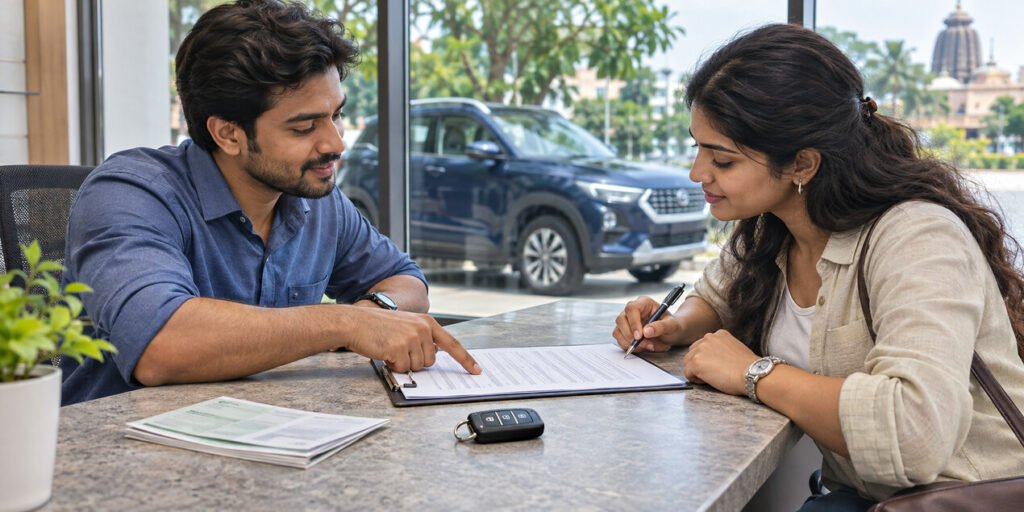
Things to Check Before Taking a Self Drive Rental Car
Being on the right side of traffic rules doesn’t start the moment you pull away. It starts before you even pick up the car. Ten minutes of checking now can save you a headache later.
Here’s a checklist you can actually use:
•Your driving license, first. Check that it’s valid and that it covers the kind of vehicle you’re renting.
•The car’s papers: registration certificate, insurance, and the Pollution Under Control (PUC) certificate.
•Look the vehicle over for scratches, dents, broken lights, anything visible that’s already damaged.
•Get photos before you leave: exterior, interior, fuel level, and the odometer reading.
•Read the rental agreement properly, especially the bits about traffic challans, fines, late returns, and damage charges.
•Save the rental company’s support number somewhere you can reach it for the whole trip.
•Ask about payment: how challans that come in during or after the rental get passed on and settled.
All of this matters even more when you’re renting in a city you don’t know. So, if you just flew down to Bhubaneswar today, you can book a self drive car rental at Bhubaneswar airport itself.
Driving a Rental Car in Bhubaneswar: What Should You Know?
Bhubaneswar works well as a base for seeing Odisha. You can spend a day around the city, head toward Puri, stop at Konark, or stretch it into a longer road trip, all without being tied to a taxi schedule. The catch is that unfamiliar roads can turn even a short drive into a hassle. So if you’re renting a self-drive car in Bhubaneswar, a few local habits are worth keeping in mind.
•Watch the speed limits, since they shift as you move between city streets, highways, and residential areas.
•Map out your route before you set off rather than glancing at your phone the whole way.
•At busy junctions, stick to the signals and lane markings, especially where the crowds are thick.
•Park where you’re supposed to and check the restrictions before you leave the car near markets, commercial areas, or tourist spots.
Conclusion
Every driver needs to know the rules that apply behind the wheel, whether it’s sticking to speed limits or paying up when a traffic fine lands. Car rental rules in India are pretty straightforward. So before you pick up your next rental, spend a few minutes on the agreement. Check the documents, and get clear on the challan policy. These are small steps, sure, but they save a lot of energy you would otherwise waste on pointless arguments.
At Rideez Car Rental, the thinking is pretty simple: enjoy the trip, drive sensibly, and hand the car back without any nasty surprises. Keep in mind, the car might not be yours, but it’s somebody’s
Frequently Asked Questions
Q1. Who pays the traffic fine on a rental car in India?
In most self-drive rentals, the driver who committed the violation pays the fine. The challan usually goes to the registered owner (the rental company) first, which then recovers the amount from the renter as per the rental agreement.
Q2. Is a renter responsible for a challan received after returning the car?
Yes, if the violation happened during your booking period. The rental company checks its records, identifies who had the car, and asks that customer to pay, even after the trip has ended.
Q3. What should I do if I get a traffic challan in a rental car?
Follow four steps: verify the challan details, inform the rental company, pay through the official e-Challan portal, and keep the payment receipt as proof.
Q4. What happens if I don’t pay for a rental car e-challan?
Unpaid e-challans can be forwarded to court, and some vehicle-related services may be blocked until the matter is settled. Odisha’s Transport Department gives a 15-day payment window from the issue date, so always check the notice for the exact deadline.
Q5. What should I check before taking a self-drive car in Bhubaneswar?
Check your valid driving license, the car’s RC, insurance and PUC certificate, and take photos of the exterior, fuel level and odometer. Read the agreement’s challan and damage clauses, and save the rental company’s support number.